How to specify a Rhino + Grasshopper automation Prompt
How to turn a modelling intention into a testable automation specification with explicit geometry, parameters, trees, dependencies, errors, and outputs.
Direct answer
Answer
A reliable Rhino-to-Grasshopper automation brief defines the geometry source, units, tolerances, data-tree contracts, parameter names, dependencies, outputs, failure states, and small verification cases before an AI model writes or edits the definition.
01
Write an input and output contract
Describe the source geometry by type, layer, name, unit, coordinate context, tolerance, and expected condition. Define what the operator selects and what the definition is allowed to create, change, bake, or export.
A vague request such as 'make this parametric' hides the most important design decisions.
02
Specify data-tree behavior
For every parameter, state the name, data type, access mode, default, valid range, unit, and behavior when missing. For trees, define path structure, list matching, grafting or flattening rules, and expected correspondence between branches.
McNeel's Grasshopper documentation treats data structures and tree matching as core algorithmic concerns; they belong in the brief rather than being left for the generated definition to guess.
03
Make the definition maintainable
Ask for named clusters or groups, readable component labels, limited dependencies, visible warnings, and a short execution log. If scripting is required, define language, Rhino version, imports, inputs, outputs, and error handling.
04
Verify with small deterministic cases
Test a normal case, minimum case, maximum case, empty input, invalid type, and geometry near the tolerance limit. Compare counts, dimensions, path structures, baked objects, and runtime. Release only after the actual definition passes those cases.
REVIEW BEFORE USE
Known limitations
- Generated definitions and scripts require testing in the named Rhino and Grasshopper version with the actual plug-ins and project geometry.
- AI can draft logic and code but cannot guarantee geometric robustness, performance, or compatibility with undocumented dependencies.
PRIMARY SOURCES
References used for this guide
These guides support Prompt evaluation and do not replace project-specific advice, code interpretation, consultant coordination, or qualified professional review.
Reviewed by archiPrompt Studio · Editorial + product review
RELATED ARCHITECTURE PRODUCTS
Put this article into practice
BIM + data operations Prompt
Rhino-to-Grasshopper Automation Spec
Specify safe, non-destructive Rhino–Grasshopper automation with review gates using Raven inside Rhino 8 and Grasshopper.
- Output
- Rhino-to-Grasshopper Automation Spec Raven prompt
- Tested
- Raven
- Rhino 8
- Grasshopper
- Price
- Checking access…
Design + visualization Prompt
Reer Grasshopper Definition Builder
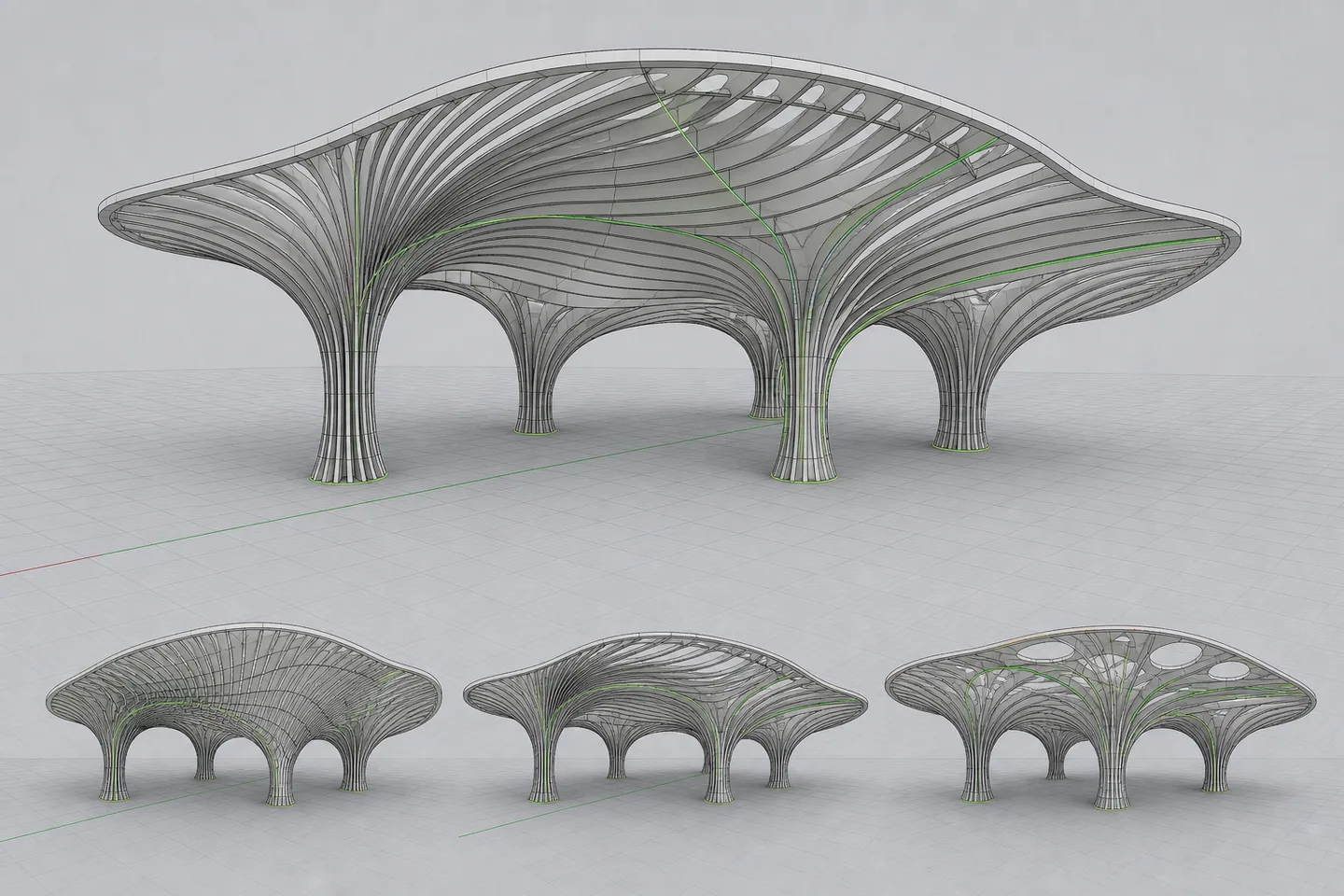
Build or refactor a Grasshopper definition into a readable native-component workflow with bounded inputs and tested Rhino outputs.
- Output
- Audited Reer task prompt
- Tested
- Reer
- Rhino 8
- Grasshopper
- Price
- Checking access…
BIM + data operations Collection
Grasshopper Scripting
Eight linked Raven prompts for building, debugging, scripting, rationalising, and automating Grasshopper workflows.
- Output
- 8 linked standalone Raven prompt systems
- Tested
- Raven
- Rhino 8
- Grasshopper
- Price
- Checking access…
Compare the wider task inventory on the BIM + data operations task page.